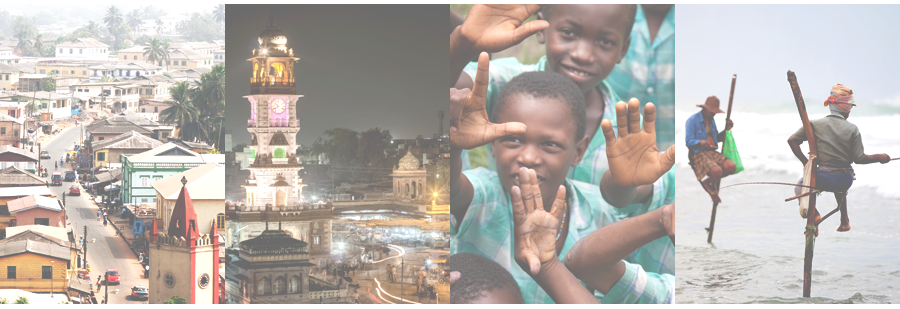
The South Centre is the policy research institution of developing countries. It is governed by its 54 Member States, serves all developing countries, and helps find solutions to global challenges.
For 31 years it has worked with Southern governments where global rules are made, at the WHO, WIPO, WTO and the UN, on issues of key relevance for development such as access to medicines, trade, investment, tax, climate and digital governance.
To keep this impact going, we have launched our Investment Case with a fundraising goal.
We invite developing countries to invest in the South Centre as their own institution. Member States can do this through their contributions, and other developing countries by joining the Centre.
We also invite partners and donors to support our work.
Read the Investment Case and help us achieve our goal:
Application Period: 30 October 2026 to 31 December 2026 (11.59 pm CET)
The Board of the South Centre (the Board) hereby announces the vacancy for the position of Executive Director of the South Centre. It therefore invites all interested persons from the Member Countries of the South Centre and/or the Group of 77 + China to apply to fill this position.
Established in 1994, the South Centre is the Inter-Governmental Policy Research Institution of developing countries, with currently 54 developing country Member States from Africa, Asia and Latin America and the Caribbean. The South Centre undertakes policy-oriented research on issues of relevance for the Global South, supports developing countries’ effective participation in multilateral fora, and provides advice, technical assistance and capacity building to governments on development-related policies and international negotiations.
The main activities of the Centre include policy research and analysis, convening of meetings for developing countries to share views and experiences and develop common negotiating positions, and technical assistance and capacity building. The issues addressed by the Centre include, inter alia, international and regional trade, finance for development, global public health, innovation and intellectual property, climate change, biodiversity, sustainable development, tax policy, investment, human rights and South-South cooperation.
The South Centre has three institutional pillars: the Council of Representatives in which the Member States are represented; the Board comprising a Chairperson and members who act in their individual capacities and provide guidance to the Secretariat; and the Secretariat headed by the Executive Director which implements the activities of the South Centre. The Secretariat is accountable to and works under the guidance of the Board and the Council.
Global South Countries Reaffirm Common Purpose to Advance Equity in the Pathogen Access and Benefit Sharing System and the Pandemic Agreement
By Dr. Viviana Muñoz Téllez
The South Centre convened a high-level meeting on 12 June 2026, from 9:30 to 11:00 AM, at the Intercontinental Hotel, Geneva. It brought together ambassadors and other senior representatives and experts of developing-country delegations engaged in the negotiations on the Annex to Article 12 of the World Health Organization (WHO) Pandemic Agreement (the Pathogen Access and Benefit Sharing System (PABS) Annex), ahead of the seventh meeting of the open-ended Intergovernmental Working Group (IGWG7), scheduled on 6 to 17 July 2026 in Geneva.
The meeting provided an opportunity for participating delegations to take stock of the IGWG process to date, to exchange assessments of the current state of the PABS Annex text, and to articulate their priorities and negotiating strategy for the next phase, with a view to strengthening coordination and unity among developing countries including the Group for Equity (GoE) and the African Group (AG) in pursuit of an equitable and legally binding outcome.
South Centre Supports Civil Society and Research Institutions in the Global South to Raise Awareness of Antimicrobial Resistance during World Antimicrobial Resistance Awareness Week 2025
by Viviana Munoz Tellez, Ningxiner Li
The South Centre supported multiple civil society institutions across the Global South to implement targeted awareness raising campaigns on antimicrobial resistance (AMR) and commemorate the World Antimicrobial Resistance Awareness Week (WAAW) 2025, with funding provided by the United Kingdom Fleming Fund. The selection of campaigns was prioritized based on the quality of the proposals and their implementation in South Centre Member Countries.
Africa Region + Egypt, Libya, Somalia, Sudan and Group for Equity Lead 80-Country Push for Fair Pathogen Access and Benefit Sharing System
At the start of IGWG4, in a remarkable show of unity by developing countries, the Africa Group (AG) and Group for Equity jointly made a statement representing 80 developing countries. This extraordinary demonstration of unity represents a powerful and inspiring moment in global health governance, as this unified bloc is championing equal footing for rapid access to pandemic materials and digital sequence information (DSI) on the one hand, and on the other hand, the ability to rapidly access vaccines, therapeutics, and diagnostics (VTDs), along with accelerated research, knowledge and technology sharing, needed to prevent and respond to pandemics.
Financial Support for Civil Society Advocacy during World Antimicrobial Resistance Awareness Week (WAAW) 2025
The South Centre invites applications from civil society organizations and research institutions from developing countries for limited financial funding (maximum 2000 USD) to design and launch or extend impactful advocacy campaigns that engage local government, communities, stakeholders and media to address antimicrobial resistance (AMR).
The scope of the campaigns can be human health, the human-animal interface, use of antimicrobials in food production systems, the role of the environment in the transmission and spread of AMR.
The campaigns should take place during the World AMR Awareness Week 2025. The theme for the World AMR Awareness Week (WAAW) 2025 is “Act Now: Protect Our Present, Secure Our Future”. This year’s WAAW will take place from 18–24 November 2025.
To apply for funding, please complete the application form below and send it to Ms. Caroline Ngome Eneme at ngomeeneme@southcentre.int by 20 September 2025. In case you need more space to provide information on your project, please attach it in a separate document. Any questions about this call can also be sent to this email address.
The selection result will be announced by 15 October 2025.
INTERNSHIP PROGRAMME – STRENGTHENING THE RIGHT TO HEALTH
The South Centre is seeking to fill internship positions to support its activities in the area of strengthening the right to health from a perspective of countries of the Global South.
Specific intern responsibilities include, but are not limited to, supporting the Strengthening the Right to Health project.
The South Centre is seeking to fill a consultancy position to support its activities in the area of tackling antimicrobial resistance in developing countries.
The Consultant will be engaged on a full or part-time basis by the South Centre under a Special Service Agreement (SSA) for a period of 6 months.
The place of assignment is Geneva, Switzerland, or from a remote location.
South Centre Supports Civil Society and Research Institutions of the Global South to Raise Awareness on Antimicrobial Resistance
The South Centre is pleased to announce its funding support for numerous civil society and research institutions in the Global South to mark World Antimicrobial Resistance (AMR) Awareness Week (WAAW) 2024. This initiative has continued for six years, contributing to the global response on AMR by empowering grassroots movements and local institutions.
Science in crisis times: The crucial role of science in sustainability and transformation
PLOS Sustainability and Transformation Journal
Authors: Paul Shrivastava, Louise Jackson, Thaura Ghneim-Herrera, Patrick Caron, Carlos Correa, Carlos Alvarez Pereira, Timothy Coombs, Oluchi Ezekannagha, Nick Ishmael-Perkins, Melissa Leach, Sélim Louafi, Gary E. Machlis, Julia Marton-Lefèvre, Alexander Müller, Janos Pasztor, Vivi Stavrou, Camilla Toulmin, and Sonja Vermeulen
In an era marked by the convergence of complex crises, the role of science in sustainability and transformative changes has never been more critical. A recent article in PLOS Sustainability and Transformation Journal, titled “Science in Crisis Times: The Crucial Role of Science in Sustainability and Transformation,” delves into this pressing issue. Authored by a distinguished group of experts, including former MAK’IT Scientific Officer Thaura Ghneim-Herrera and South Centre Executive Director Carlos M. Correa, the article draws from the insights of the 2022 MAK’IT conference “What Role for Science in Crisis Times? Outlook in the Health, Environment, and Agriculture Interconnected Areas”, held in University of Montpellier with the support of the South Centre, which brought together 18 international experts.
The United Nations High-level Meeting on Antimicrobial Resistance on September 26, 2024: Uniting to Enable the Global Response to the Silent Pandemic
By Viviana Munoz Tellez
The “silent pandemic” of antimicrobial resistance (AMR) is getting worse and requires a global response built on international cooperation and solidarity. On 26 September 2024, the United Nations (UN) General Assembly will hold a second High Level Meeting on Antimicrobial Resistance. The dedicated meeting is a new effort to bring urgent attention by leaders for increased action on the growing risk of untreatable infections becoming more widespread and of increasing mortality.
Financial Support for Civil Society Advocacy during World Antimicrobial Resistance Awareness Week (WAAW) 2024
The South Centre invites applications from civil society organizations and research institutions from developing countries for limited financial funding to design and launch or extend impactful advocacy campaigns that engage local government, communities and media to address antimicrobial resistance.
The scope of the campaigns can be human health, the human-animal interface, use of antimicrobials in food production systems, the role of the environment in the transmission and spread of AMR, and the link of Universal Health Coverage with AMR.
The campaigns should take place around the World AMR Awareness Week 2024. The WAAW 2024 theme is “Educate. Advocate. Act now”, and it will be held from 18 to 24 November 2024.