South Centre Statement to the 26th Session of the WIPO Standing Committee on the Law of Patents (SCP)
The 26th session of the WIPO Standing Committee on the Law of Patents (SCP) is meeting this week at the WIPO headquarters in Geneva. The South Centre is participating in the current session of the SCP as an observer. The following statement was delivered by the South Centre on the first day of the current session of the SCP.
“Viral hepatitis is an international public health challenge, comparable to other major communicable diseases, including HIV, tuberculosis and malaria. Despite the significant burden it places on communities across all global regions, hepatitis has been largely ignored as a health and development priority until recently”. – WHO, Global Health Sector strategy on viral Hepatitis 2016-2021: Towards ending viral hepatitis
The Need to Avoid “TRIPS-Plus” Patent Clauses in Trade Agreements
A recent article in a prestigious journal reminds us of how the intellectual property chapter of free trade agreements can prevent the sick from getting treatment. This article also critiques the TPP clauses and warns that they should not be translated to national laws or copied into other FTAs being negotiated. (more…)
This paper discusses the current negotiation issues in the context of the Agreement on Trade Related Aspects of Intellectual Property Rights (TRIPS) and the position the African Group has taken in these negotiations. (more…)
Avoid patent clauses in trade treaties that can kill millions
By Martin Khor
A recent article in a prestigious journal reminds us of how the intellectual property chapter of free trade agreements can prevent the sick from getting treatment. This article also critiques the TPP clauses and warns that they should not be translated to national laws or copied into other FTAs being negotiated. (more…)
Mitigating the Regulatory Constraints Imposed by Intellectual Property Rules under Free Trade Agreements
IP provisions in FTAs may have implications on a wide range of public policy areas. A vast academic literature has addressed the “flexibilities” available under the TRIPS Agreement and the negative impact of FTAs in relation to access to medicines. (more…)
South Centre Statement on the Amendment to the WTO TRIPS Agreement to Ease Access to Affordable Medicine
An amendment to the TRIPS Agreement that aims to facilitate the access to affordable medicines has entered into force upon approval by two thirds of the WTO members. The amendment reflects the recognition by WTO Members of the need for the continued enhancement of global intellectual property rules to allow Members to systematically take measures to protect public health.
On World AIDS Day, threat to access to medicines looms large
By Shailly Gupta
Today millions of people living with HIV in South-East Asia are receiving treatment and leading healthy lives thanks to affordable generic antiretroviral (ARVs) medicines. Governments and treatment providers across Asia, such as the government of Indonesia and Médecins Sans Frontières (MSF), patients across our missions in many countries, depend on an uninterrupted supply of affordable generic HIV medicines to reduce new HIV infections and AIDS-related deaths in the region. But as the trade negotiators from 16 countries gather in Indonesia next week to deliberate the terms of a trade agreement — the Regional Comprehensive Economic Partnership agreement (RCEP), access to low-cost generic medicines is under grave threat. (more…)
South Centre Statement to the 18th session of WIPO Committee on Development and Intellectual Property
The following is the statement delivered on 31 October 2016 by the South Centre to the World Intellectual Property Organization’s (WIPO) Committee on Development and Intellectual Property (CDIP) at its eighteenth session. The Centre highlights the importance of the WIPO Development Agenda.
South Centre Statement to the WIPO Assemblies 2016
The statement highlights that the greatest challenge for developing countries and LDCs in the area of intellectual property (IP) is the proliferation of regional and bilateral trade and investment agreements that impose IP obligations, together with the coercive external political and economic pressure to restrain from making use of the flexibilities in the IP system.
UN General Assembly: World leaders pledge action to control superbugs
By Martin Khor
World leaders at the Summit of the UN General Assembly last week spoke on the need to save millions of lives by controlling the crisis of antibiotic resistance and adopted a landmark political declaration calling for global action. At the opening of the Summit of the United Nations General Assembly on 20 September, it sounded much like the swansong of two of the regular stalwarts of this annual affair. It is the last General Assembly to be attended by UN Secretary-General Ban Ki-moon and the United States President Barack Obama. (more…)
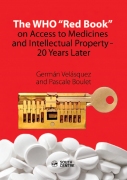
The WHO “Red Book” on Access to Medicines and Intellectual Property – 20 Years Later
About the book: The publication in 1998 by the WHO’s Essential Drugs Department of the document “Globalization and Access to Drugs: Implications of the WTO/TRIPS Agreement” marked a point in time in the movement to ensure access to essential medicines for all. The publication, often referred to as ‘the WHO red book’, marked the beginning of an international policy process to address the issue of innovation and access to essential medicines. It triggered a series of reactions from the pharmaceutical industry, the US Government and the WTO, reproaching WHO for stepping out of its role. In light of these attacks, the then Director General of WHO decided to send the document to be revised by three independent academics specializing in intellectual property. The letters and documents criticizing the WHO publication as well as the review by the three international experts are reproduced in this book.






 About the book: The publication in 1998 by the WHO’s Essential Drugs Department of the document “Globalization and Access to Drugs: Implications of the WTO/TRIPS Agreement” marked a point in time in the movement to ensure access to essential medicines for all. The publication, often referred to as ‘the WHO red book’, marked the beginning of an international policy process to address the issue of innovation and access to essential medicines. It triggered a series of reactions from the pharmaceutical industry, the US Government and the WTO, reproaching WHO for stepping out of its role. In light of these attacks, the then Director General of WHO decided to send the document to be revised by three independent academics specializing in intellectual property. The letters and documents criticizing the WHO publication as well as the review by the three international experts are reproduced in this book.