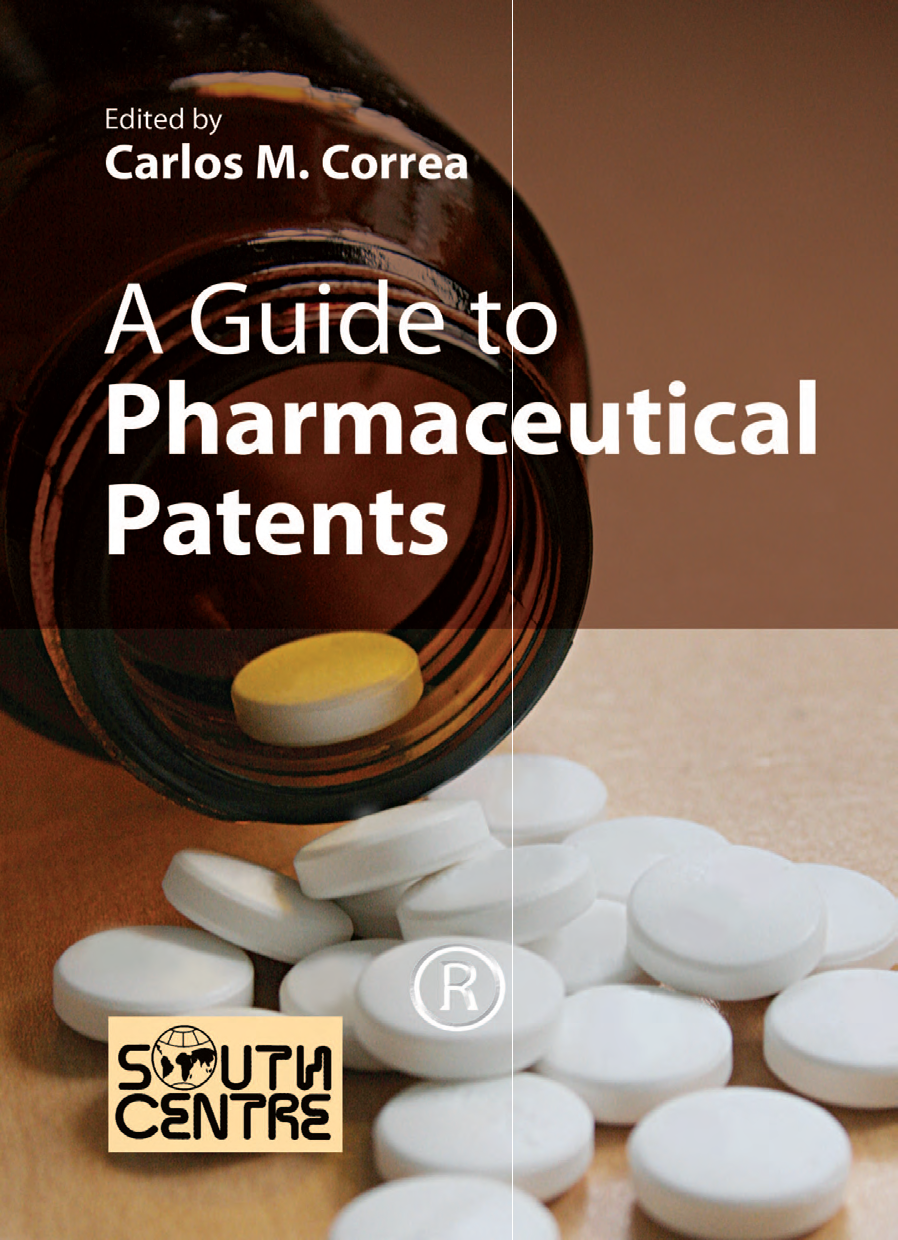
Some Critical Issues Related to Access to Medicines and Intellectual Property
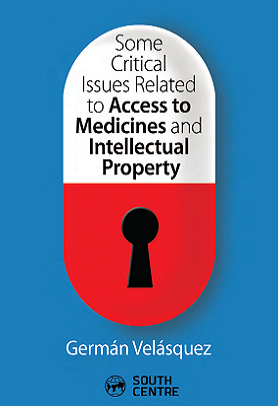
About the book: The international debate and negotiations over access to medicines in the last ten years have been one of the most important moments in the recent history of public health. This debate is taking place in UN specialized agencies like WHO, UNDP, UNCTAD, UNAIDS, WIPO, WTO, the Commission of Human Rights, NGOs working on health, philanthropic foundations, and the pharmaceutical industry. This book is a collection of papers by the South Centre between 2011 and 2014 on the deliberations and negotiations in the World Health Organization (WHO) on access to medicines and their relationship with other actors dealing with international trade and intellectual property regimes.
Author: Germán Velásquez is the Special Adviser for Health and Development at the South Centre, Geneva, Switzerland
Derechos de Propiedad Intelectual, Investigación y Desarrollo, Derechos Humanos y Acceso a Medicamentos: Bibliografía Seleccionada y Anotada
Descripción:
El Centro del Sur ha preparado esta bibliografía seleccionada y anotada para asistir a los países en desarrollo en la implementación de políticas y reglamentaciones en materia de PI de manera coherente con los objetivos de desarrollo y los principios de salud pública. El creciente volumen de literatura que se está produciendo en torno al tema de PI, I+D, derechos humanos y acceso a medicamentos en los últimos cinco años puede ayudar a los países a encontrar las oportunidades y el espacio de maniobra para proteger a los ciudadanos de los países en desarrollo del medio insano que han generado las nuevas normas del comercio internacional.
Autores: Germán Velásquez, Carlos M. Correa, Xavier Seuba
Pharmaceutical Innovation, Incremental Patenting and Compulsory Licensing
About the book: This book examines patent trends and the use of compulsory licenses relating to pharmaceuticals in five developing countries: Argentina, Brazil, Colombia, India and South Africa. It finds a number of common features and problems, and shows how the application of rigorous standards of patentability may contribute to protect public health by promoting local production and competition.
Editor: Carlos M. Correa is the Special Advisor on Intellectual Property and Trade of the South Centre and Director of the Center for Interdisciplinary Studies on Industrial Property at the Law Faculty, University of Buenos Aires.
About the book: This volume contains a selection of papers used in the course “Towards an Intellectual Property Regime that Protects Public Health”. They explore the principal issues in intellectual property as it relates to public health. They are comprehensive, though not exhaustive, as the field is a constantly evolving one.
This publication is intended to facilitate the conducting of further courses on the implication of intellectual property rights on access to medicines. However, it can also be used as a reference for readers who, having already acquired an understanding of the basic concepts in this field, would like to gain a deeper understanding of the issues.
IPR, R&D, Human Rights and Access to Medicines: An Annotated and Selected Bibliography
About the Book: The South Centre seeks to provide the appropriate technical assistance and country support to developing countries, within a comprehensive and coherent national IP Strategy, to promote the implementation of the TRIPS Agreement that is consistent with the protection of public health and promotion of access to medicines. To this end, the South Centre has prepared this selected and annotated bibliography to assist developing countries to implement IP policies and regulations consistent with development goals and public health principles.
Authors: Germán Velásquez, Carlos Correa and Xavier Seuba
About The Book: This book examines in detail the purpose and characteristics of the patentability standards and analyses typical claims in pharmaceutical patents. It provides recommendations on ways of implementing such standards in a manner that avoids the grant of patent right on developments which are genuine innovations or which are not properly described.
Editor: Carlos M. Correa is Special Adviser on Trade and Intellectual Property at the South Centre, Geneva.
The Bolar Exception: Legislative Models and Drafting Options
The basic principle of patent law is that once the term of a patent has expired, the protected subject matter becomes a part of the public domain. Hence, it can be freely used, including for commercial purposes, without the interference by the former patent owner. This allows competitors to enter the market immediately after such expiry, eventually leading to lower prices for consumers and welfare gains. (more…)
Implementing Pro-Competitive Criteria for the Examination of Pharmaceutical Patents
This document discusses criteria for implementing the patentability requirements in relation to patent applications covering products and processes, as well as the use of pharmaceutical products. The adoption of rigorous criteria with this purpose is important for four main reasons. (more…)
The grant of patents and the exorbitant cost of “lifesaving” drugs
By Germán Velásquez
The important relationship between the examination of patents carried out by national patent offices and the right of citizens to access to medicines hasn’t always been well understood. Too often these are viewed as unrelated functions or responsibilities of the state. And the reason is clear: patentability requirements are not defined by patent offices, but frequently by the courts, tribunals, legislation or treaty negotiators. This is the case when patent policy is implemented in isolation from, rather than guided by, public health policy. (more…)
Guidelines on Patentability and Access to Medicines
The important relationship between the examination of patents carried out by national patent offices and the right of citizens to access to medicines hasn’t always been well-understood. Too often these are viewed as to unrelated functions or responsibilities of the State . And the reason is clear: Patentability requirements are not defined by patent offices, but frequently by the courts, tribunals, legislation or treaty negotiators. (more…)
South Centre Calls on the WTO TRIPS Council to Support Access to Medicines and Technological Advancement for the Least Developed Countries
The South Centre fully supports the Least Developed Countries’ (LDC) request for an extension of the transition period granted to LDCs under Article 66.1 of the World Trade Organization’s Agreement on Trade Related Aspects of Intellectual Property Rights (TRIPS) in respect of pharmaceutical products for as long as a WTO member remains an LDC, and the waiver from obligations under Articles 70.8 and 70.9 of the TRIPS Agreement. (more…)
Intellectual Property in the Trans-Pacific Partnership: Increasing the Barriers for the Access to Affordable Medicines
Most free trade agreements signed by the United States, the European Union and the members of the European Free Trade Association (EFTA) in the last 15 years contain chapters on intellectual property rights with provisions applicable to pharmaceuticals. Such provisions considerably expand the rights recognized to pharmaceutical companies under the Agreement on Trade Related Aspects of Intellectual Property Rights (TRIPS) established in the context of the World Trade Organization. (more…)






 About the book: The international debate and negotiations over access to medicines in the last ten years have been one of the most important moments in the recent history of public health. This debate is taking place in UN specialized agencies like WHO, UNDP, UNCTAD, UNAIDS, WIPO, WTO, the Commission of Human Rights, NGOs working on health, philanthropic foundations, and the pharmaceutical industry. This book is a collection of papers by the South Centre between 2011 and 2014 on the deliberations and negotiations in the World Health Organization (WHO) on access to medicines and their relationship with other actors dealing with international trade and intellectual property regimes.