Repensando la fabricación mundial y local de productos médicos tras el COVID-19
Por Germán Velásquez
La crisis sanitaria mundial sin precedentes provocada por la pandemia del coronavirus –COVID-19, durante el primer semestre de 2020, hace que se vuelva a plantear con especial urgencia el debate sobre la producción farmacéutica local. La crisis de COVID-19 puso de manifiesto la interdependencia en la producción mundial de medicamentos, ningún país es autosuficiente. Muchos países industrializados están tomando la decisión de repatriar o desarrollar la producción de Ingredientes Farmacéuticos Activos (API). Muchos gobiernos están empezando a hablar de soberanía farmacéutica y/o seguridad sanitaria. Si esto se hace realidad, los países en desarrollo tendrán que desarrollar y/o fortalecer la producción local de medicamentos y vacunas. La guerra para obtener la futura vacuna para COVID-19 no parece fácil con estos nuevos desarrollos.
The Role of Courts in Implementing TRIPS Flexibilities: Brazilian Supreme Court Rules Automatic Patent Term Extensions Unconstitutional
By Vitor Henrique Pinto Ido
This policy brief provides a background, summary and analysis of the Brazilian Federal Supreme Court decision of 6 May 2021 that ruled automatic patent term extensions unconstitutional, striking down Article 40, Sole Paragraph, of the Brazilian Industrial Property Code of 1996. It concludes that this is a landmark ruling that contributes to the implementation of a more balanced patent regime in Brazil, with a positive impact on access to medicines in the country. It is an important precedent in relation to the role that courts may play in defining the contours of intellectual property protection and the TRIPS flexibilities.
Propiedad intelectual y acceso a medicamentos: una introducción a cuestiones clave – algunos términos y conceptos básicos
Por Germán Velásquez
La propiedad intelectual y las patentes en particular se han convertido en uno de los temas más debatidos sobre el acceso a los medicamentos, desde la creación de la Organización Mundial del Comercio (OMC) y la entrada en vigor del Acuerdo sobre los Aspectos de los Derechos de Propiedad Intelectual relacionados con el Comercio (ADPIC). Las patentes no son de ninguna manera las únicas barreras para el acceso a medicamentos que salvan vidas, pero pueden desempeñar un papel significativo, o incluso determinante. Durante el período de protección de la patente, la capacidad del titular de la patente para determinar los precios, en ausencia de competencia, puede hacer que el medicamento resulte inalcanzable para la mayoría de las personas que viven en los países en desarrollo. Este primer número de los “Materiales de capacitación del South Centre” pretende, en su primera parte, ofrecer una introducción a cuestiones clave en el ámbito del acceso a los medicamentos y la propiedad intelectual. La segunda parte describe y define algunos términos y conceptos básicos de esta área relativamente nueva de las políticas farmacéuticas, que son los aspectos comerciales de los derechos de propiedad intelectual que regulan la investigación, el desarrollo y el suministro de medicamentos y las tecnologías sanitarias en general.
Emerging Trends in FTAs and Public Health: Investment Agreements and Intellectual Property
Friday, 28 May 2021 – 16:00-17:30 (CET)
The inclusion of TRIPS-Plus provisions in developing country IP laws, as a result of negotiations of free trade agreements (FTAs) continues to be of concern. In addition, there are various emerging areas that require attention from developing countries, where accumulated knowledge and institutional learning are more limited. These include investment agreements that include ‘intellectual property’ as a category of investment – with subsequent ISDS mechanisms, as well as competition and investment chapters or agreements that may restrict the policy space, such as the China-EU Comprehensive Investment Agreement. There are several important developments to consider for the upcoming years. New negotiations in the period of Covid-19 crisis, when countries are in dire financial situations, may lead to even more unbalanced negotiations. The UK is pursuing new agreements after Brexit with developing countries, while the USA has signaled renewed attention to multilateralism and at the same time is continuing to make use of Section 301 of its trade law to advance reforms in third countries. The AfCFTA negotiations of the intellectual property chapter are set to start this year. Moreover, the RCEP Agreement is to be implemented via national law amendments and attention must be given in particular to the process for Least Developed Countries (LDCs) and the technical assistance offered.
In this context, the South Centre is holding a series of webinars on emerging trends related to free trade agreements (FTAs) and investment agreements that impact public health. In this first session, we will discuss the topic of investment agreements and intellectual property, including varied angles to the issue, such as perspectives for post Covid-19 agreements, the legal construction of IP as a category of investment, the challenges of ISDS and policy reform options, and the analysis of a concrete case.
Este espacio es organizado por el Ministerio de Relaciones Exteriores de Bolivia, en coordinación con el South Centre y el PNUD Bolivia. El Foro es un espacio de intercambio de información técnica y debate de opciones de política pública al alcance de los países en desarrollo. Incluirá la participación de panelistas internacionales, tanto de organismos internacionales, sociedad civil y representantes de países.
Jueves, 13 de mayo de 2021, 09:00-10:45 (Bolivia) / 15:00-16:45 (Geneva)
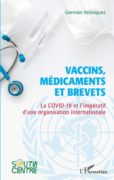
La covid-19 et l’impératif d’une organisation internationale
Details:
À partir de début 2020, le monde a dû faire face à un considérable défi sanitaire, économique et social avec l’épidémie de la COVID-19. La crise s’est poursuivie et aggravée dans la plupart des pays du monde. Beaucoup ont voulu explorer des réponses sans prendre réellement en compte les avis des principaux organismes internationaux dans le domaine de la santé, au premier rang desquels l’Organisation mondiale de la santé (OMS). L’OMS fait l’objet de critiques. Il est néanmoins fondamental qu’une agence multilatérale comme elle puisse exercer une véritable autorité et jouer un rôle de chef de le indépendant et en défense de l’ensemble des pays de la planète. Alors, comment faire pour qu’elle puisse jouer ce rôle ? Ce livre contribue à apporter des réponses à cette question, en s’appuyant sur les réflexions développées par le Centre Sud, un organisme intergouvernemental qui défend les perspectives des pays du Sud. Il aborde notamment l’avancement des réflexions et débats concernant l’accès aux médicaments et vaccins pour répondre à cette pandémie ou à d’éventuelles crises ultérieures.
Auteur: Germán Velásquez est conseiller spécial en matière de politique et de santé au South Centre à Genève.
Compulsory license in Germany: Analysis of a landmark judicial decision
By Christoph Spennemann and Clara Warriner
This policy brief analyzes how the German Federal Court of Justice addressed compulsory licensing under German patent law, where the request for a compulsory license was used in preliminary proceedings as a defense against alleged patent infringement.
Scope of Compulsory License and Government Use of Patented Medicines in the Context of the COVID-19 Pandemic
To meet public health needs, such as in the current COVID-19 emergency, governments can use compulsory licenses and government use as a tool for procurement and import of patented medicines.
These mechanisms are provided for in most laws worldwide. The WTO TRIPS Agreement, as reaffirmed by the Doha Declaration on TRIPS and Public Health, recognises the right of WTO members to grant compulsory licenses and their freedom to determine the grounds upon which such licenses may be granted (read our Call for Action on Intellectual Property and Trade Measures to Address the Covid-19 Crisis here).
The South Centre offers a guide for the issuance of compulsory licenses and government use, see here, aquí en español.
The table below provides information of instances of their use.
Scope of Compulsory License and Government Use of Patented Medicines in the Context of the COVID-19 Pandemic
To meet public health needs, such as in the current COVID-19 emergency, governments can use compulsory licenses and government use as a tool for procurement and import of patented medicines.
These mechanisms are provided for in most laws worldwide. The WTO TRIPS Agreement, as reaffirmed by the Doha Declaration on TRIPS and Public Health, recognises the right of WTO members to grant compulsory licenses and their freedom to determine the grounds upon which such licenses may be granted (read our Call for Action on Intellectual Property and Trade Measures to Address the Covid-19 Crisis here).
The South Centre offers a guide for the issuance of compulsory licenses and government use, see here, aquí en español.
The table below provides information of instances of their use.
Repenser la R&D pour les produits pharmaceutiques après le choc du nouveau coronavirus COVID-19
Par Dr. Germán Velásquez
La crise sanitaire mondiale sans précédent provoquée par la pandémie de coronavirus –COVID-19–, au cours du premier trimestre 2020, ramène avec une urgence particulière la discussion sur le modèle de recherche et développement (R&D) pour les produits pharmaceutiques et autres technologies de la santé. La crise COVID-19 montre qu’il est urgent de repenser la gouvernance mondiale de la santé publique pour la R&D en matière de santé. L’adoption d’un instrument contraignant – comme le permet l’article 19 de la Constitution de l’OMS – sur cette question a été proposée il y a de nombreuses années. Ce document soutient qu’il est temps de relancer et de concrétiser cette initiative.
Reconsidérations sur la fabrication mondiale et locale de produits médicaux après le COVID-19
Par Germán Velásquez
La crise sanitaire mondiale sans précédent provoquée par la pandémie de coronavirus (COVID-19), au cours du premier semestre 2020, ramène avec une urgence particulière la discussion sur la production pharmaceutique locale. La crise du COVID-19 a mis en évidence l’interdépendance de la production mondiale de médicaments—aucun pays n’étant autosuffisant. De nombreux pays industrialisés prennent la décision de rapatrier ou de développer la production d’ingrédients pharmaceutiques actifs (IPA). De nombreux gouvernements commencent à parler de souveraineté pharmaceutique et/ou de sécurité sanitaire. Si cela devient une réalité, les pays en développement devront développer et/ou renforcer la production locale de médicaments et de vaccins. La guerre pour obtenir le futur vaccin pour COVID-19 ne semble pas facile avec ces nouveaux développements.





 Details: