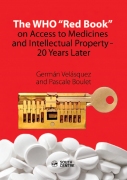
The WHO “Red Book” on Access to Medicines and Intellectual Property – 20 Years Later
About the book: The publication in 1998 by the WHO’s Essential Drugs Department of the document “Globalization and Access to Drugs: Implications of the WTO/TRIPS Agreement” marked a point in time in the movement to ensure access to essential medicines for all. The publication, often referred to as ‘the WHO red book’, marked the beginning of an international policy process to address the issue of innovation and access to essential medicines. It triggered a series of reactions from the pharmaceutical industry, the US Government and the WTO, reproaching WHO for stepping out of its role. In light of these attacks, the then Director General of WHO decided to send the document to be revised by three independent academics specializing in intellectual property. The letters and documents criticizing the WHO publication as well as the review by the three international experts are reproduced in this book.
Liberalization, Financial Instability and Economic Development
About the book: Weighing up the costs and benefits of economic interdependence in a finance-driven world, this book argues that globalization, understood and promoted as absolute freedom for all forms of capital, has been oversold to the Global South, and that the South should be as selective about globalization as the North. The book challenges the orthodoxy on the link between financial deepening and economic growth, as well as that between the efficiency of financial markets and the benefits of liberalization. Ultimately, the author urges developing countries to control capital flows and asset bubbles, preventing financial fragility and crises, and recommends regional policy options for managing capital flows and exchange rates.
Some Critical Issues Related to Access to Medicines and Intellectual Property
About the book: The international debate and negotiations over access to medicines in the last ten years have been one of the most important moments in the recent history of public health. This debate is taking place in UN specialized agencies like WHO, UNDP, UNCTAD, UNAIDS, WIPO, WTO, the Commission of Human Rights, NGOs working on health, philanthropic foundations, and the pharmaceutical industry. This book is a collection of papers by the South Centre between 2011 and 2014 on the deliberations and negotiations in the World Health Organization (WHO) on access to medicines and their relationship with other actors dealing with international trade and intellectual property regimes.
Author: Germán Velásquez is the Special Adviser for Health and Development at the South Centre, Geneva, Switzerland
Derechos de Propiedad Intelectual, Investigación y Desarrollo, Derechos Humanos y Acceso a Medicamentos: Bibliografía Seleccionada y Anotada
Descripción:
El Centro del Sur ha preparado esta bibliografía seleccionada y anotada para asistir a los países en desarrollo en la implementación de políticas y reglamentaciones en materia de PI de manera coherente con los objetivos de desarrollo y los principios de salud pública. El creciente volumen de literatura que se está produciendo en torno al tema de PI, I+D, derechos humanos y acceso a medicamentos en los últimos cinco años puede ayudar a los países a encontrar las oportunidades y el espacio de maniobra para proteger a los ciudadanos de los países en desarrollo del medio insano que han generado las nuevas normas del comercio internacional.
Autores: Germán Velásquez, Carlos M. Correa, Xavier Seuba
Pharmaceutical Innovation, Incremental Patenting and Compulsory Licensing
About the book: This book examines patent trends and the use of compulsory licenses relating to pharmaceuticals in five developing countries: Argentina, Brazil, Colombia, India and South Africa. It finds a number of common features and problems, and shows how the application of rigorous standards of patentability may contribute to protect public health by promoting local production and competition.
Editor: Carlos M. Correa is the Special Advisor on Intellectual Property and Trade of the South Centre and Director of the Center for Interdisciplinary Studies on Industrial Property at the Law Faculty, University of Buenos Aires.
About the book: This volume contains a selection of papers used in the course “Towards an Intellectual Property Regime that Protects Public Health”. They explore the principal issues in intellectual property as it relates to public health. They are comprehensive, though not exhaustive, as the field is a constantly evolving one.
This publication is intended to facilitate the conducting of further courses on the implication of intellectual property rights on access to medicines. However, it can also be used as a reference for readers who, having already acquired an understanding of the basic concepts in this field, would like to gain a deeper understanding of the issues.
IPR, R&D, Human Rights and Access to Medicines: An Annotated and Selected Bibliography
About the Book: The South Centre seeks to provide the appropriate technical assistance and country support to developing countries, within a comprehensive and coherent national IP Strategy, to promote the implementation of the TRIPS Agreement that is consistent with the protection of public health and promotion of access to medicines. To this end, the South Centre has prepared this selected and annotated bibliography to assist developing countries to implement IP policies and regulations consistent with development goals and public health principles.
Authors: Germán Velásquez, Carlos Correa and Xavier Seuba
Financial Crisis and Global Imbalances: A Development Perspective
About the book: This book examines – from a standpoint of promoting stability and growth in developing countries – key policy lessons to be drawn from the devastating global economic crisis of 2008-09. In this collection of papers on the 2008-09 Great Recession and its implications, leading economist Yılmaz Akyüz underlines the need for economic restructuring along the above lines with a view to more effective crisis prevention and intervention. Given their vulnerability to shocks and limited capacity to respond, he says, this reform process is an endeavor in which developing economies have a crucial interest.
About The Book: This book examines in detail the purpose and characteristics of the patentability standards and analyses typical claims in pharmaceutical patents. It provides recommendations on ways of implementing such standards in a manner that avoids the grant of patent right on developments which are genuine innovations or which are not properly described.
Editor: Carlos M. Correa is Special Adviser on Trade and Intellectual Property at the South Centre, Geneva.
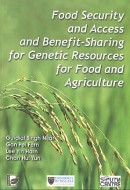
Food Security and Access and Benefit-Sharing for Genetic Resources for Food and Agriculture
About the book: A study prepared for the UN FAO (Food and Agriculture Organisation) on whether, and how, national and regional laws, guidelines and other arrangements on access to genetic resources and benefit-sharing (ABS) may impact upon agriculture and food security.
Authors: Gurdial Singh Nijar, Gan Pei Fern, Lee Yin Harn and Chan Hui Yun
The Right to Development, Small Island Developing States and the SAMOA Pathway
In 2015, the United Nations community reached agreements on updating the financing for development mechanisms, Agenda 2030 and an updated climate change regime. The SAMOA pathway is an important resource and an input to these efforts. (more…)
South Centre Statement to the Open-Ended Meeting of WHO Member States: Follow-up of the report of the Consultative Expert Working Group on Research and Development: Financing and Coordination (CEWG)
At the open-ended meeting of WHO Member States on the follow-up of the report of the CEWG, the South Centre called for concrete discussions to start negotiations on a binding legal instrument on R&D financing and coordination. (more…)






 About the book: The publication in 1998 by the WHO’s Essential Drugs Department of the document “Globalization and Access to Drugs: Implications of the WTO/TRIPS Agreement” marked a point in time in the movement to ensure access to essential medicines for all. The publication, often referred to as ‘the WHO red book’, marked the beginning of an international policy process to address the issue of innovation and access to essential medicines. It triggered a series of reactions from the pharmaceutical industry, the US Government and the WTO, reproaching WHO for stepping out of its role. In light of these attacks, the then Director General of WHO decided to send the document to be revised by three independent academics specializing in intellectual property. The letters and documents criticizing the WHO publication as well as the review by the three international experts are reproduced in this book.