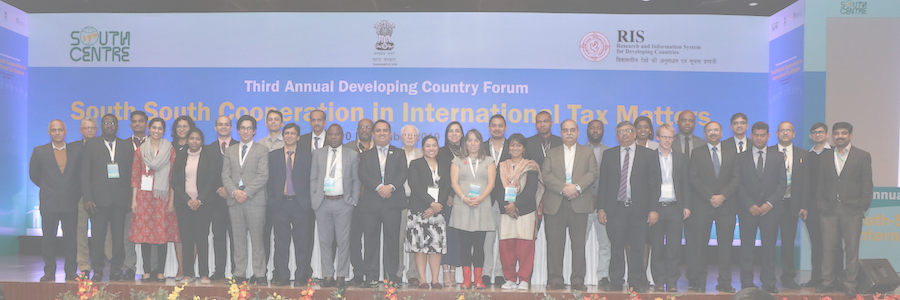
South Centre Inputs to UN Secretary-General for “Promotion of inclusive and effective tax cooperation at the United Nations”
The South Centre submits the following comments and recommendations to the UN Secretary-General for the report being prepared in response to UN General Assembly resolution 77/244 on “Promotion of inclusive and effective tax cooperation at the United Nations.”
Análisis de las intersecciones entre cambio climático y derechos humanos
Por Daniel Uribe Terán y Luis Fernando Rosales
Los efectos del cambio climático en la vida diaria de las personas amenazan el pleno disfrute de los derechos humanos. El Consejo de Derechos Humanos ha adoptado dos resoluciones históricas en las que se reconoce por un lado el derecho humano a un medio ambiente limpio, saludable y sostenible (Resolución 48/13), y se establece por otro el mandato de un Relator Especial sobre la promoción y la protección de los derechos humanos en el contexto del cambio climático (Resolución 48/14). Aun así, parece existir la necesidad de que la CMNUCC y la estructura de derechos humanos de las Naciones Unidas mantengan un diálogo más amplio a fin de dar con una respuesta coordinada y coherente al cambio climático y sus efectos sobre los derechos humanos.
En este documento de investigación se analizan las intersecciones de estos dos sistemas jurídicos. Para ello, se identifica el modo en que las negociaciones relativas al cambio climático y la estructura de derechos humanos pueden contribuir a fortalecer la cooperación internacional. También se reconoce la necesidad de un debate internacional de mayor calado acerca de las relaciones entre los derechos humanos y el cambio climático, coherente con los principios de equidad y las responsabilidades comunes pero diferenciadas del CMNUCC.
Analyse des Intersections entre le Changement Climatique et les Droits de l’Homme
Par Daniel Uribe Teran et Luis Fernando Rosales
Les effets du réchauffement climatique sur la vie quotidienne des êtres humains menacent la pleine jouissance de leurs droits. Le Conseil des droits de l’homme a adopté deux résolutions d’une portée historique, qui reconnaissent le droit de l’homme à un environnement propre, sain et durable (résolution 48/13), et nomment un rapporteur spécial chargé de la promotion et de la protection des droits de l’homme dans le contexte du changement climatique (résolution 48/14). Toutefois, un dialogue plus large entre la Convention-cadre des Nations unies sur les changements climatiques (CCNUCC) et l’architecture de protection des droits de l’homme de l’ONU semble nécessaire en vue de parvenir à une réponse coordonnée et cohérente au réchauffement climatique et à ses effets sur les droits de l’homme.
Le présent document de recherche analyse les points de convergence entre ces deux mécanismes en mettant en avant de quelle manière les négociations sur le réchauffement climatique et l’architecture de protection des droits de l’homme peuvent contribuer à renforcer la coopération internationale. Il reconnaît également la nécessité de discussions plus approfondies au niveau international sur les liens entre droits de l’homme et réchauffement climatique, conformément aux principes d’équité et de responsabilités communes mais différenciées inclus dans la CCNUCC.
Broadcasting treaty – South Centre statement at SCCR 43
“We note with concern that the proposed text expands beyond the agreed mandate, under the approach of expanding exclusive rights to broadcasters with narrow limitations and exceptions (L&Es)…”
The copyright system must be truly balanced. It means it should enable public interest purposes, particularly access to knowledge and education, a fair reward for creators, and real incentives – and not barriers – for creativity and research…
The Midterm Comprehensive Review of the International Decade for Action on Water for Sustainable Development amid growing tension between a human rights perspective and the commodification and privatization of water
By Luis Fernando Rosales Lozada
Climate change is affecting the availability of water resources in different regions around the world. In addition, some growing trends towards water commodification and privatization could exacerbate the problem since they are guided by profit maximization strategies. The United Nations (UN) will hold the Midterm Comprehensive Review (MCR) of the Implementation of the Objectives of the International Decade for Action, “Water for Sustainable Development”, 2018–2028, from 22 to 24 March 2023. This is an important opportunity for the international community to assess the challenges on access to clean drinking water and sanitation. The MCR debates and outcomes should be guided by a human rights approach towards promoting access to water for all in 2030 in alignment with Sustainable Development Goal (SDG) 6.
Understanding the Functioning of EU Geographical Indications
By Andrea Zappalaglio
This contribution investigates the functioning of the EU sui generis Geographical Indication (GI) system, with a specific focus on the regime for the protection of agricultural products and foodstuffs within the scope of EU Regulation 1151/2012. In particular, based on the results of the recent “Study on the Functioning of the EU Geographical Indications System” of the Max Planck Institute for Innovation and Competition (February 2022), this paper: (1) clarifies the nature of EU GIs as it emerges from an empirical assessment of the specifications of all the products that appear on the EU register; (2) comparatively analyses the national practices of the EU Member States and explores the discrepancies that exist among them to date; (3) provides an in-depth assessment of the structures of the specifications of EU GIs, highlighting the domestic specificities; (4) investigates the contents and functions of the amendments to the specifications of the registered products. It concludes by emphasizing the importance of the present research in light of the current EU international agenda, with a specific focus on the bilateral agreements recently or currently negotiated.
AU-DELÀ DE LA RESPONSABILITÉ SOCIALE DE L’ENTREPRISE : RENFORCER LE DEVOIR DE DILIGENCE EN MATIÈRE DE DROITS DE L’HOMME AU MOYEN DE L’INSTRUMENT JURIDIQUEMENT CONTRAIGNANT RELATIF AUX ENTREPRISES ET AUX DROITS DE L’HOMME
Par Daniel Uribe Terán
Le débat sur la nécessité d’imposer des obligations de diligence raisonnable en matière de droits de l’homme (DDDH, en anglais Human Rights Due Diligence, ou HRDD) a suscité l’intérêt des décideurs politiques, des organisations de la société civile et des organisations internationales. La tendance actuelle à l’adoption de législations nationales concernant les normes de HRDD montre une variété d’options et de modèles qui pourraient servir d’étape vers l’adoption d’un cadre international solide de responsabilité des entreprises et de recours en cas de violation des droits de l’homme dans le contexte des activités commerciales.
Ce document de recherche vise à identifier les éléments qui caractérisent la diligence raisonnable en matière de droits de l’homme afin de trouver une éventuelle définition commune pour sa mise en œuvre. Pour ce faire, il analyse les pratiques actuelles des régions et des États en matière d’adoption de législations obligatoires sur HRDD dans différents secteurs. Enfin, il discutera des principes qui caractérisent l’approche adoptée par le Groupe de travail intergouvernemental à composition non limitée des Nations Unies chargé d’adopter un instrument juridiquement contraignant sur les sociétés transnationales et autres entreprises et de la manière dont cet instrument pourrait servir de pierre angulaire à l’élaboration de règles modernes sur la question des entreprises et des droits de l’homme.
Más allá de la responsabilidad social de las empresas: reforzar la diligencia debida en materia de derechos humanos mediante el Instrumento jurídicamente vinculante sobre empresas y derechos humanos
Por Daniel Uribe Terán
El debate sobre la necesidad de establecer requisitos obligatorios de debida diligencia en materia de derechos humanos (en inglés: Human Rights Due Diligence, o HRDD) ha atraído el interés de los responsables políticos, las organizaciones de la sociedad civil y las organizaciones internacionales. La tendencia actual sobre la adopción de la legislación nacional relativa a las normas de HRDD muestra una variedad de opciones y modelos que podrían servir como un paso adelante hacia la adopción de un marco internacional sólido de responsabilidad corporativa y remedio en caso de violaciones de los derechos humanos en el contexto de las actividades empresariales.
Este documento de investigación pretende identificar los elementos que caracterizan la debida diligencia en materia de derechos humanos para encontrar una posible definición común para su aplicación. Para ello, se analiza la práctica regional y estatal actual en la adopción de legislación obligatoria sobre HRDD en diferentes sectores. Por último, se discutirán los principios que caracterizan el enfoque adoptado por el Grupo de Trabajo Intergubernamental de Composición Abierta de las Naciones Unidas encargado de adoptar un instrumento jurídicamente vinculante sobre las empresas transnacionales y otras empresas comerciales y cómo este instrumento podría servir como una importante piedra angular para la elaboración de normas modernas sobre la cuestión de las empresas y los derechos humanos.
Digital taxation under the OECD Amount A and UN Article 12B mechanisms for market jurisdictions in Africa: a comparative analysis
By Erica Rakotonirina
This Policy Brief examines the need for the evolution and harmonization of international taxation in the face of the digitalization of economic transactions.
Between the OECD proposal for shared taxation of residual profits through the Amount A mechanism and the UN proposal of Article 12B for taxing income from Automated Digital Services on a gross basis through shared but capped taxation, with an optional variant of the taxation of net profits, African States need to make vital political and technical choices.
The strategic negotiations must include regulatory sustainability, the right balance and fiscal fairness between the divergent interests of residence states vs source states (which include almost all African countries), and MNEs in their quest for profit and expansion.
The Policy Brief carries out quantified evaluation of possible revenue estimates using a case study approach. However, such an exercise remains difficult for questions of accessibility and reliability of data relating to the activities of multinational companies.
To be realistic, the scope of the study was restricted to a reference company in the digital sector but targeted economies of different scales. The results of the revenue estimates represent an optimistic case of the impacts on tax revenues of the application of the OECD and UN measures on different types of economies.
The WTO faces an existential crisis, despite a reasonable outcome at the Twelfth Ministerial Conference. The one way by which the WTO can resuscitate itself is to make sure that the negotiating agenda is anchored in the SDGs rather than in the narrow interests of its most powerful members. The changing role of the State must also be factored in by the WTO.