Interaction of Transfer Pricing & Profit Attribution: Conceptual and Policy Issues for Developing Countries
By Dr. Vinay Kumar Singh
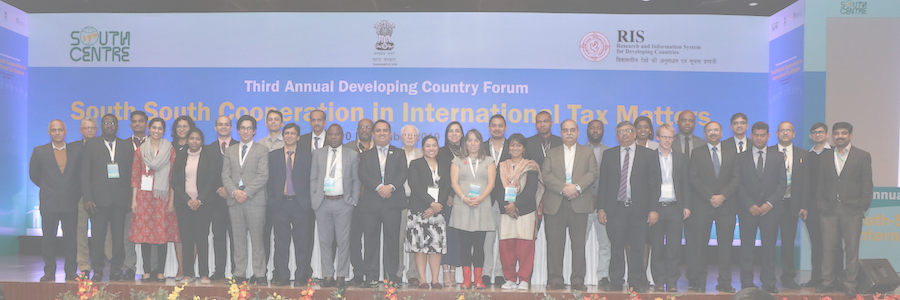
Till 2010, model tax conventions treated profit attribution to permanent establishments and transfer pricing under different articles, and profit attribution under Article 7 allowed sales to be taken into account both in the direct accounting method as well as the indirect apportionment method. However, the revised Article 7 in the 2010 update of the OECD Convention approximated profit attribution with transfer pricing and omitted the option of apportionment, thereby undermining sales and contributions made by market jurisdiction to business profits. When a tax treaty retains Article 7 based on the UN Convention or the earlier OECD Convention, Contracting States can take sales into account and also opt for apportionment. Developing countries need to fully understand these implications of Article 7 in their tax treaties, and opt for informed choices for transfer pricing and profit attribution to permanent establishments, including apportionment that takes sales into account.
Title: International Conference on TRIPS-CBD Linkage: Issues and Way Forward
Date: 7-8 June 2018
Venue: Room IX, Palais des Nations, Geneva
Organizers: The South Centre, Centre for WTO Studies and the Indian Institute of Foreign Trade, co-sponsored by thePermanent Missions of Brazil, India, Indonesia and South Africa to the WTO
Title: Side Event to the 71st World Health Assembly, on Access to Medicines: Overcoming Obstacles created by monopolies – Essential to UHC and the 2030 Agenda
Date: 25 May 2018
Venue: Room VIII, Palais des Nations, Geneva
Organizers: Missions of Brazil, India, Morocco, Senegal, and Thailand, with the support of the South Centre
Digital economy is a given, as much as industrialization was inevitable on invention of means of incorporating steam and later fossil fuel and electric power into manufacturing. It is not a matter of being for or against it. It is about what kind of digital economy we should have. A development agenda for digital economy needs to be articulated, based on a narrative that takes proper account of developing country interests. (more…)
Major Outcomes of the 71st Session of the World Health Assembly of WHO
By Nirmalya Syam and Mirza Alas
The 71st session of the World Health Assembly (WHA) of the World Health Organization (WHO) took place from 21 to 26 May 2018 in Geneva, Switzerland. The Assembly adopted several decisions and resolutions including the adoption of the General Programme of Work (GPW) of WHO for the period 2019-2023, as well as decisions on addressing access to medicines and vaccines and their global shortage, and the recommendations of an overall programme review of the WHO Global Strategy and Plan of Action on Public Health, Innovation and Intellectual Property (GSPA-PHI). (more…)
Acceso a medicamentos: experiencias con licencias obligatorias y uso gubernamental – el caso de la Hepatitis C
Por Dr. Carlos M. Correa y Dr. Germán Velásquez
El acceso a medicamentos está fuertemente condicionado por su precio y por los mecanismos de financiamiento que pueden aplicarse en cada país. […] Un factor determinante en la fijación del precio de los medicamentos es el grado de competencia existente en una particular clase terapéutica, la que a su vez es influenciada por la existencia o no de derechos de propiedad intelectual, como patentes de invención.
There are increasing warnings of an imminent new financial crisis, not only from the billionaire investor George Soros, but also from eminent economists associated with the Bank for International Settlements, the bank of central banks. The warnings come at a moment when there are signs of international capital flowing out of some emerging economies, including Turkey, Argentina and Indonesia. Some economists have been warning that the boom-bust cycle in capital flows to developing countries will cause disruption, when there is a turn from boom to bust. All it needs is a trigger, which may then snowball as investors in herd-like manner head for the exit door. Their behaviour is akin to a self-fulfilling prophecy: if enough speculative investors think this is the time to move back to the global financial capitals, then the exodus will happen, as it did in previous “bust” phases of the cycle. (more…)