Tackling Antimicrobial Resistance: Challenges for Developing Countries
On 21 September 2016, a High Level Meeting was held on antimicrobial resistance at the sides of the United Nations General Assembly. It was followed by the adoption of a political declaration. This declaration paves the way for new coordinated actions on antimicrobial resistance backed by higher political commitment, on the basis of the Global Action Plan on Antimicrobial Resistance (GAP) of the World Health Organization (WHO). (more…)
Innovation and the Global Expansion of Intellectual Property Rights: Unfulfilled Promises
The incorporation of intellectual property into trade agreements has not proven to bring about the promised benefits. The premises that have underpinned the global strengthening and expansion of intellectual property through such agreements – namely that the same standards of protection are suitable for countries with different levels of development and that innovation will be boosted – do not match the reality. (more…)
The boundaries between scientific and technological knowledge are nebulous in some technical fields, such as the biological sciences and their applications. This has led to the appropriation under patents of knowledge (such as on specific genes) of scientific nature, which may not only have negative effects for the further development of science and new technological contributions, but also encroach on the fundamental right of access to science. (more…)
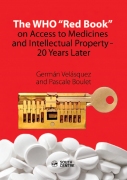
The WHO “Red Book” on Access to Medicines and Intellectual Property – 20 Years Later
About the book: The publication in 1998 by the WHO’s Essential Drugs Department of the document “Globalization and Access to Drugs: Implications of the WTO/TRIPS Agreement” marked a point in time in the movement to ensure access to essential medicines for all. The publication, often referred to as ‘the WHO red book’, marked the beginning of an international policy process to address the issue of innovation and access to essential medicines. It triggered a series of reactions from the pharmaceutical industry, the US Government and the WTO, reproaching WHO for stepping out of its role. In light of these attacks, the then Director General of WHO decided to send the document to be revised by three independent academics specializing in intellectual property. The letters and documents criticizing the WHO publication as well as the review by the three international experts are reproduced in this book.
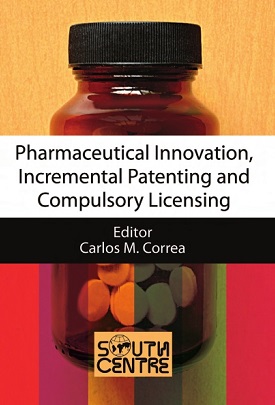
Pharmaceutical Innovation, Incremental Patenting and Compulsory Licensing
About the book: This book examines patent trends and the use of compulsory licenses relating to pharmaceuticals in five developing countries: Argentina, Brazil, Colombia, India and South Africa. It finds a number of common features and problems, and shows how the application of rigorous standards of patentability may contribute to protect public health by promoting local production and competition.
Editor: Carlos M. Correa is the Special Advisor on Intellectual Property and Trade of the South Centre and Director of the Center for Interdisciplinary Studies on Industrial Property at the Law Faculty, University of Buenos Aires.
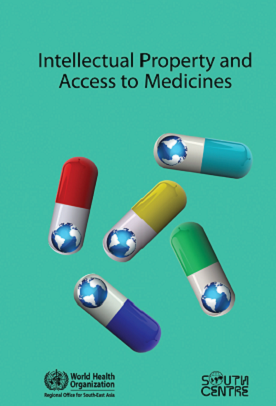
About the book: This volume contains a selection of papers used in the course “Towards an Intellectual Property Regime that Protects Public Health”. They explore the principal issues in intellectual property as it relates to public health. They are comprehensive, though not exhaustive, as the field is a constantly evolving one.
This publication is intended to facilitate the conducting of further courses on the implication of intellectual property rights on access to medicines. However, it can also be used as a reference for readers who, having already acquired an understanding of the basic concepts in this field, would like to gain a deeper understanding of the issues.
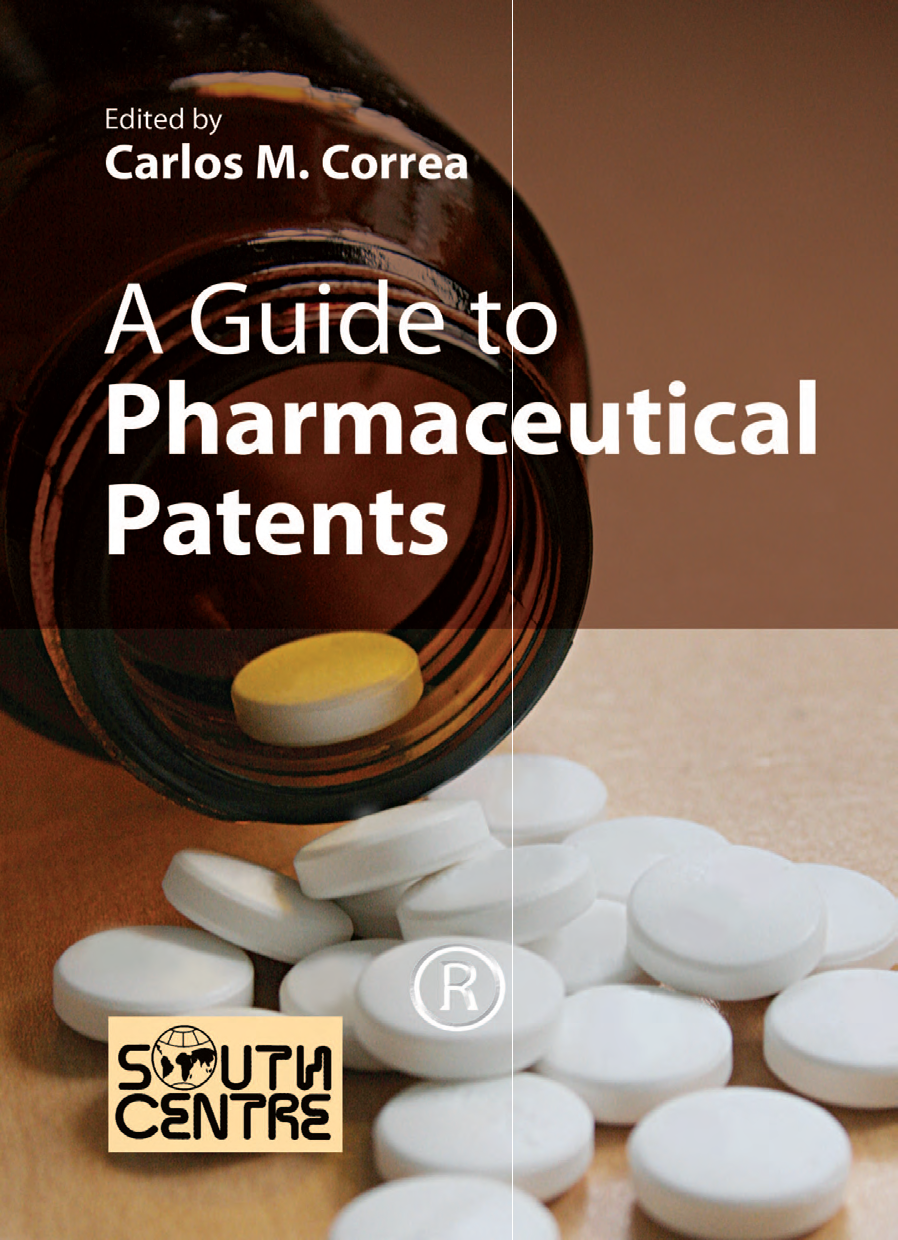
About The Book: This book examines in detail the purpose and characteristics of the patentability standards and analyses typical claims in pharmaceutical patents. It provides recommendations on ways of implementing such standards in a manner that avoids the grant of patent right on developments which are genuine innovations or which are not properly described.
Editor: Carlos M. Correa is Special Adviser on Trade and Intellectual Property at the South Centre, Geneva.
The Bolar Exception: Legislative Models and Drafting Options
The basic principle of patent law is that once the term of a patent has expired, the protected subject matter becomes a part of the public domain. Hence, it can be freely used, including for commercial purposes, without the interference by the former patent owner. This allows competitors to enter the market immediately after such expiry, eventually leading to lower prices for consumers and welfare gains. (more…)
Implementing Pro-Competitive Criteria for the Examination of Pharmaceutical Patents
This document discusses criteria for implementing the patentability requirements in relation to patent applications covering products and processes, as well as the use of pharmaceutical products. The adoption of rigorous criteria with this purpose is important for four main reasons. (more…)
The grant of patents and the exorbitant cost of “lifesaving” drugs
By Germán Velásquez
The important relationship between the examination of patents carried out by national patent offices and the right of citizens to access to medicines hasn’t always been well understood. Too often these are viewed as unrelated functions or responsibilities of the state. And the reason is clear: patentability requirements are not defined by patent offices, but frequently by the courts, tribunals, legislation or treaty negotiators. This is the case when patent policy is implemented in isolation from, rather than guided by, public health policy. (more…)







 About the book: The publication in 1998 by the WHO’s Essential Drugs Department of the document “Globalization and Access to Drugs: Implications of the WTO/TRIPS Agreement” marked a point in time in the movement to ensure access to essential medicines for all. The publication, often referred to as ‘the WHO red book’, marked the beginning of an international policy process to address the issue of innovation and access to essential medicines. It triggered a series of reactions from the pharmaceutical industry, the US Government and the WTO, reproaching WHO for stepping out of its role. In light of these attacks, the then Director General of WHO decided to send the document to be revised by three independent academics specializing in intellectual property. The letters and documents criticizing the WHO publication as well as the review by the three international experts are reproduced in this book.