Accelerating COVID-19 Vaccine Production via Involuntary Technology Transfer
By Dr. Olga Gurgula
This policy brief explains that the currently discussed proposals at the WTO related to increasing the production of COVID-19 vaccines, including the EU proposal to clarify the use of compulsory licensing and the submission by South Africa and India on the intellectual property (IP) waiver, require complementary mechanisms to rapidly improve the production of COVID-19 vaccines that are urgently needed today. The key problem is that to accelerate the manufac- ture of COVID-19 vaccines, access to knowledge and know-how, that are protected by trade secrets owned by several pharmaceutical companies, is required. It is therefore important that governments implement an additional mechanism of compulsory licensing of trade secrets that would allow an involuntary transfer of COVID-19 vaccine technologies. Such a mechanism would be compliant with the TRIPS Agreement and relevant whether the TRIPS waiver is adopted or not agreed upon. While this mechanism must provide full access to the information necessary to manufacture the vaccines in question, it must also ensure the protection of the transferred trade secrets.
O papel dos tribunais na implementação das flexibilidades do TRIPS: Supremo Tribunal Federal (STF) do Brasil declara inconstitucionais as extensões automáticas de prazos de patentes
Por Vitor Henrique Pinto Ido
Este policy brief traz uma contextualização, um resumo e uma análise da decisão do Supremo Tribunal Federal do Brasil, de 6 de maio de 2021, que declarou inconstitucionais as extensões automáticas de prazos de patentes, revogando o Artigo 40, Parágrafo Único, da Lei de Propriedade Industrial do Brasil, de 1996. Conclui-se que esta é uma decisão histórica que contribui para a implementação de um regime de patentes mais equilibrado no Brasil, com impacto positivo no acesso a medicamentos no país. É um precedente importante no que se refere ao papel que os tribunais podem desempenhar na definição dos contornos da proteção à propriedade intelectual e das flexibilidades do Acordo TRIPS.
Working Session at the WTO Public Forum 2021: The Future of the TRIPS Agreement Post COVID-19
Wednesday, 29 September 2021
16h30 –17h30 CET
Disciplines on intellectual property protection are part of the multilateral trade system through the WTO TRIPS Agreement. The COVID-19 pandemic has brought to bear again the tension between the protection of intellectual property rights and public health, which had been addressed in 2001 through the Doha Declaration on the TRIPS Agreement and Public health. Having in view the TRIPS flexibilities, this session will discuss the role of interpretation, temporary waivers and amendments in dealing with such tension and what further actions could be taken under the WTO rules in order to promote access to medical products for all.
The purpose of this report is to analyse the vaccines industry under the focus of Industrial Economics as an input for the design of the pertinent instruments to promote development, manufacturing and distribution of vaccines against SARS-CoV-2 in sufficient amounts to immunize all countries as soon as possible. We also need to be prepared for future emerging infectious diseases with the potential of global expansion.
The report shows that the vaccines industry is – and has been for a long time – far away from the competitive market paradigm with notorious market failures. As a result, the industry is underperforming with shortages and stockouts, exit of firms from the industry, underinvestment in research and development (R&D) and manufacturing, even an “anaemic development pipeline”, all signs of market failure.
After a brief review of policies implemented to tackle these problems we conclude that after the COVID-19 pandemic there is a need to implement a profound overhauling of the industry and to fundamentally reformulate and extend global public policies to stimulate R&D, manufacturing, distribution and access.
Guidelines for the examination of patent applications relating to pharmaceuticals
By Carlos M. Correa
This document represents a follow-up to an earlier document, Guidelines for the Examination of Pharmaceutical Patents: Developing a Public Health Perspective, which was published in 2007 as a working paper by the International Centre for Trade and Sustainable Development (ICTSD), the United Nations Conference on Trade and Development (UNCTAD) and the World Health Organization (WHO).
The present document takes into account developments since the publication of the ICTSD-UNCTAD-WHO working paper in 2007. It includes new examples of patent applications and/or grants, and analysis of and references to the initiatives of a number of countries that have adopted laws and/or policies that seek to factor in public health considerations in the examination of patent applications.
With this document, the aim is to provide guidance for the development or revision of guidelines on patent examination processes in developing countries in response to concerns about the rise of patent numbers in the pharmaceutical sector. For this purpose, a number of recommendations are made with regard to the examination of the patentability of applications relating to pharmaceutical products and processes.
EU Proposals regarding Article 31bis of the TRIPS Agreement in the Context of the COVID-19 Pandemic
By Nirmalya Syam
This Policy Brief presents an analysis of the proposal by the European Union (EU) with regards to Article 31bis of the Agreement on Trade-Related Aspects of Intellectual Property Rights (TRIPS), as part of a Declaration on the TRIPS Agreement and Public Health in the circumstances of a pandemic. It discusses the EU’s proposed clarifications, why Article31bis does not provide an effective solution to promote access to pharmaceutical products and possible options.
COVID-19 y la necesidad de una organización internacional
Velásquez, Germán: Vacunas, medicamentos y patentes. COVID-19 y la necesidad de una organización internacional. Vacunas covid-19: entre la ética, la salud y la economía. Desarrollo de la vacuna COVID-19; la inmunidad y el contagio; el nacionalismo de las vacunas; el mecanismo COVAX; licencias obligatorias; Acceso a medicamentos y vacunas: un nuevo actor. Medicamentos y propiedad intelectual: diez años de la estrategia mundial de la oms. Repensando la fabricación mundial y local de productos médicos tras el covid-19. Repensando la i+d para productos farmacéuticos después del covid-19. Propiedad intelectual y acceso a medicamentos y vacunas. Las reformas de la organización mundial de la salud en la época de covid-19. 2021. 244 pp. ISBN 978-9915-650-31-9.
Autor: Germán Velásquez, Asesor especial sobre políticas y salud, South Centre de Ginebra
The TRIPS COVID-19 Waiver, Challenges for Africa and Decolonizing Intellectual Property
By Yousuf Vawda
The intellectual property (IP) regimes of African countries are a function of their colonial past, which imposed strong protections, and which have been entrenched through the Agreement on Trade Related Aspects of Intellectual Property Rights (TRIPS Agreement). This has had a devastating effect on their ability to access necessary health products both before and during the current COVID-19 pandemic. It is important to reflect on the challenges that African countries face, before considering the implications of the WTO TRIPS waiver on COVID-19 (henceforth, waiver). In assessing the challenges faced by these countries, as well as the possibilities of improving access, this paper argues that while the waiver offers the best available solution to overcome the current supply shortages of a range of COVID-19 health products, in the longer term a break from this past—the decolonization of IP regimes—is necessary.
The WTO TRIPS Waiver Should Help Build Vaccine Manufacturing Capacity in Africa
By Faizel Ismail
The current global health crisis created by the COVID-19 pandemic has re-focused our attention on the inadequacy of the TRIPS agreement and the patent system to address global public health crises. This time, developing countries must ensure that the TRIPS waiver succeeds in creating the impetus for the building of manufacturing capacity in the poorest countries, especially in Africa, for vaccines, pharmaceuticals and other health technologies. This is the only effective way in which African countries can reduce their dependence on imports of essential medicines and build their health security, contributing to the achievement of the sustainable development goals, for the poorest countries.
Precios justos para la cobertura sanitaria universal: El impacto de la judicialización de la salud
Por Silvina Andrea Bracamonte y José Luis Cassinerio
En el presente trabajo se describen las principales directrices y recomendaciones sobre políticas de precios para ayudar a los países a desarrollar estrategias efectivas, como herramientas para lograr el acceso equitativo a los productos sanitarios con precios asequibles, desechando el creciente fenómeno de la judicialización de la salud como vía adecuada para abordar con un enfoque sistémico esta problemática compleja.
Ensuring a Sustainable and Resilient Response to COVID-19 and Emerging Infectious Diseases through Local Production
United Nations High-Level Political Forum 2021 Side Event
Organized by South Centre, ReAct – Action on Antibiotic Resistance and Innovation + Design Enabling Access at the Johns Hopkins Bloomberg School of Public Health



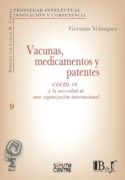 Velásquez, Germán: Vacunas, medicamentos y patentes. COVID-19 y la necesidad de una organización internacional. Vacunas covid-19: entre la ética, la salud y la economía. Desarrollo de la vacuna COVID-19; la inmunidad y el contagio; el nacionalismo de las vacunas; el mecanismo COVAX; licencias obligatorias; Acceso a medicamentos y vacunas: un nuevo actor. Medicamentos y propiedad intelectual: diez años de la estrategia mundial de la oms. Repensando la fabricación mundial y local de productos médicos tras el covid-19. Repensando la i+d para productos farmacéuticos después del covid-19. Propiedad intelectual y acceso a medicamentos y vacunas. Las reformas de la organización mundial de la salud en la época de covid-19. 2021. 244 pp. ISBN 978-9915-650-31-9.