Malaria and Dengue: Understanding two infectious diseases affecting developing countries and their link to climate change
By Mirza Alas
Developing countries will face more complex challenges as infectious disease patterns transform due to climate change and climate variability. These challenges include how to reduce the incidence of malaria (including the significant challenge of resistant malaria), dengue, and other vector-borne and water-borne diseases that are likely to experience alterations in geographical range and lengthening of the transmission seasons due to changing temperatures and rain patterns. Climate extremes, e.g., heat and floods, are implicating the spread of climate-sensitive infectious diseases such as dengue and malaria transmitted by vectors like mosquitoes. In the context of growing financial pressure on governments due to COVID-19, the ensuing fiscal challenges may severely limit the capacity to effectively respond to health challenges in countries already affected by malaria and dengue. Other countries that have made gains in controlling vector-borne infections could also be vulnerable to rising disease burden. This research paper aims to analyze how changes in malaria and dengue pose a challenge for developing countries as they prepare mitigation and adaptation strategies for climate health. The paper will also provide some general recommendations on the importance of integration of health in national climate change strategies.
The Role of Courts in Implementing TRIPS Flexibilities: Brazilian Supreme Court Rules Automatic Patent Term Extensions Unconstitutional
By Vitor Henrique Pinto Ido
This policy brief provides a background, summary and analysis of the Brazilian Federal Supreme Court decision of 6 May 2021 that ruled automatic patent term extensions unconstitutional, striking down Article 40, Sole Paragraph, of the Brazilian Industrial Property Code of 1996. It concludes that this is a landmark ruling that contributes to the implementation of a more balanced patent regime in Brazil, with a positive impact on access to medicines in the country. It is an important precedent in relation to the role that courts may play in defining the contours of intellectual property protection and the TRIPS flexibilities.
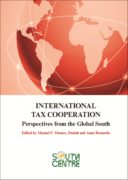
International Tax Cooperation: Perspectives from the Global South
About the Book:
A substantive reform of the global tax system involving a variety of multilateral platforms is underway. The question is not whether the tax standards and practices will change, but in which direction.
Developing countries have long sought changes in rules, standards and procedures shaping the allocation of taxing rights among sovereign states. In the wake of the 2008-2010 Great Recession, developed country governments engaged in massive public sector layoffs and channeling enormous public resources to bail out large financial companies and their wealthy investors. The Panama Papers, the Paradise Papers, the Lux Leaks became household words in the United States and Europe because of the journalistic coverage. Other scandals, such as the “cum/ex” fraud in Germany involving a loophole in the taxing of dividend receipts were less known but just as materially significant. Tax reform, particularly as it applied to the treatment of corporations working in multiple tax jurisdictions, thus became not only a problem of developing countries but an issue of global concern.
Tax Haven Listing in Multiple Hues: Blind, Winking or Conniving?
By Jahanzeb Akhtar and Verónica Grondona
Tax havens are among the biggest challenges faced by developing countries in achieving their national development goals. States, international organisations, multilateral agencies and non-governmental organisations have all made several efforts at compiling ‘lists’ of tax havens at the multilateral and national levels, with varying levels of seriousness and outcomes. This research paper examines these efforts by analysing the objectivity of criteria used and the clarity of the final outcome in a comparative manner. The paper is organized into four sections dealing with the tax haven blacklisting by the Organisation for Economic Co-operation and Development (OECD), the countries of the South, the European Union (EU) and an analysis across lists. The concluding section offers some suggestions.
Developing Countries and the Contemporary International Tax System: BEPS and other issues
By Marcos Aurélio Pereira Valadão
This policy brief addresses the design of international taxation and tax cooperation in the context of issues presented in the Organisation of Economic Co-operation and Development (OECD)/Group of Twenty (G20) Base Erosion and Profit Shifting (BEPS)Project. It further considers their significance for developing countries and provides the Brazilian approach to those issues. The brief concludes by exploring the importance of regional cooperation vis-à-vis international organizations and highlights relevant considerations for developing countries engaging with the contemporary international tax system.
Developing countries are increasingly being adversely affected by the economic recession in Europe and the slowdown in the United States.
The hope that major emerging economies like China, India and Brazil would continue to have robust growth, de-coupling from Western economies and becoming an alternative engine of global growth has been dashed by recent data showing that they are themselves weakening.






 About the Book: