Redistributing Taxing Rights to the Global South through the Digitalized Economy
By Carlos Protto
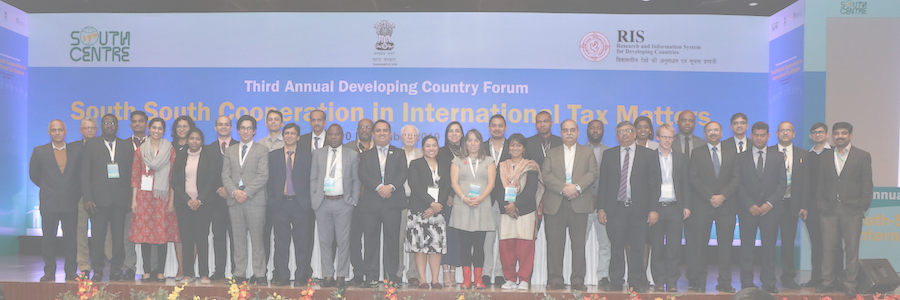
A historic discussion is underway within both the United Nations (UN) and the Organisation for Economic Co-operation and Development (OECD) on redistributing taxing rights to the Global South through proposals on taxing the digitalized economy. An overview of the issues at stake is provided in this SouthViews by Carlos Protto, Member of the UN Committee of Experts on International Cooperation in Tax Matters and Argentina’s representative in the Steering Group of the OECD/Group of Twenty (G20) Inclusive Framework on Base Erosion and Profit Shifting (BEPS). The text is based on his presentation at the international virtual seminar co-organized by the South Centre on “Equity in Global Tax Regimes and Implications for the SDGs” held on 7 October 2020. The recording is available here: https://www.youtube.com/watch?v=3wAESmfvRN4&ab_channel=uomlive.
Practical Implications of ‘Vaccine Nationalism’: A Short-Sighted and Risky Approach in Response to COVID-19
By Muhammad Zaheer Abbas, PhD
To end the COVID-19 pandemic and ensure a return of normalcy, an effective and safe vaccine is the best hope. The vaccine nationalism approach, adopted by some countries to gain preferential access to emerging COVID-19 vaccines, poses a threat to the fair and equitable distribution of the potential vaccines across the globe. This research paper critically evaluates the approach of vaccine nationalism and argues that this self-centred political behaviour of leaving others behind is short-sighted, potentially risky, morally indefensible, and practically inefficient in containing the pandemic. This paper highlights why it is important for national governments to support the collaborative and coordinated effort of the COVID-19 Vaccines Global Access (COVAX) facility for the timely development and efficient delivery of potential COVID-19 vaccines. It concludes that an effective response to the current health and economic crisis should be guided by values of international solidarity, multilateralism, equality, and global collaboration. It proposes the adoption of an enforceable global framework to address the concerns arising from the combination of vaccine nationalism and intellectual property exclusivities.
What is the status of Antimicrobial Resistance National Action Plans in the African Region?
The South Centre and ReAct (Action on Antibiotic Resistance) Africa will hold avirtual conference on ‘‘What is the status of Antimicrobial Resistance National Action Plans in the African Region?’, to be held from 1st to 4th of December 2020.
The Nagoya Protocol International Access and Benefit Sharing Regime
By Viviana Munoz Tellez
The Nagoya Protocol on Access to Genetic Resources and the Fair and Equitable Sharing of Benefits Arising from their Utilization to the Convention on Biological Diversity entered into force in October 2014. Ten years have now passed since the adoption of the Protocol by the Parties to the Convention on Biological Diversity, now with 129 Parties. The Protocol requires countries to set up access and benefit sharing rules and procedures for the Protocol’s implementation at the national level. This policy brief describes the main characteristics of the Protocol and makes recommendations for countries to advance in its implementation. Importantly, the Protocol’s language empowers countries with considerable policy space for the design of domestic access and benefit-sharing rules.
The United Nations Declaration on the Rights of Peasants and Other People Working in Rural Areas: One Step Forward in the Promotion of Human Rights for the Most Vulnerable
By Maria Natalia Pacheco Rodriguez and Luis Fernando Rosales Lozada
Peasants and other people living rural areas are among the most vulnerable in the world. In 2015, an estimated of 736 million people in the world lived in extreme poverty, of which 589 million – 80 per cent – live in rural areas. Despite increasing urbanization in the last decades, almost 45 per cent of the global population still lives in areas defined as rural, and most of them are among the poorest of the world. The situation is most likely worsening because of the COVID-19 pandemic. In 2018, the United Nations (UN) General Assembly, adopted the United Nations Declaration on the Rights of Peasants and Other People Working in Rural Areas by the supporting vote of a vast majority of countries. There are many reasons to consider the Declaration as one of the most relevant actions in the realm of human rights law taken by the United Nations in recent years. Some of them are the recognition of peasants as specific subjects of rights; the reaffirmation of existing standards tailored for the reality of people living in rural areas; and the development of international law to address existing gaps in the protection of their rights in complex subject matters such as the right to land, the right to seeds, and the right to means of production. In underscoring the importance of the Declaration for the world, this research paper narrates the process of construction of the Declaration, its contributions to international human rights law and stresses on its potential for poverty reduction and food security, in line with the sustainable development goals (SDGs) and the strategies of the UN Decade on Family Farming.
Las reformas de la Organización Mundial de la Salud en la época de COVID-19
Por Germán Velásquez
A lo largo de sus 70 años de historia la OMS ha pasado por varias reformas lideradas por varios directores generales, como Halfdan Mahler en la Conferencia de Alma ata sobre la atención primaria de salud, 1978, Gro Harlem Brundtland con su « reach out to the private sector » 1998, Margaret Chan con su inconcluso debate sobre el rol de « los autores no estatales » 2012 . Una vez mas, y de forma contundente la crisis sanitaria del 2020 pone en evidencia la fragilidad de la Organización y nos revela que la OMS no tiene los instrumentos y mecanismos legales necesarios para aplicar sus normas y orientaciones y que su manera de financiamiento no es sostenible y adecuada para responder al desafío de la COVID-19. Este documento trata de identificar cuales son los problemas principales de que sufre la OMS y cuales serian las medidas necesarias que una reforma de la Organización tendría que abordar.
Analysis of the Overcapacity and Overfishing Pillar of the WTO Fisheries Subsidies Negotiations
By Peter Lunenborg
Sustainable Development Goal (SDG) 14.6 asks World Trade Organization (WTO) Members to “prohibit certain forms of fisheries subsidies which contribute to overcapacity and overfishing”. Hence, the pillar on overcapacity and overfishing (O&O) is the most important pillar of the fisheries subsidies negotiations. However, WTO Members have not yet agreed on the approach to prohibition. This research paper distinguishes three types of approaches: the fisheries management linked approach (sometimes referred to as effects-based approach), capping and list-based approach.
This paper argues that the core of the prohibition in the Overfishing and Overcapacity pillar should be list-based and be applicable to large scale fisheries who receive the bulk of global fisheries subsidies especially those that are capacity-enhancing. For subsidies which are not prohibited an effects-based test might be considered. A supplementary subsidy prohibition covering areas beyond national jurisdiction (ABNJ) could be considered, or the vessels or operations targeted by proponents of the ABNJ proposals could be deemed ‘large scale’. If capping remains on the table, capping subsidies per fisher could be explored. Special and Differential Treatment should be an integral element of the outcome as developing countries whose fisheries sector are less developed should not take on the same commitments.
South Centre Statement to the 2nd Session of the Expert Mechanism on the Right to Development
The 2030 Agenda for Sustainable Development recognizes the commitment of the international community to make the right to development (RtD) a reality for everyone, leaving no one behind, and building peaceful and inclusive societies on the basis of the respect of human rights.
The right to development becomes prominent during and in the aftermath of facing the COVID-19 pandemic. The creation of favorable conditions for international, economic, scientific and technological cooperation, including technology transfer and know-how, is part and parcel of the right to development through the promotion of the well-being of all peoples, the improvement of the economic conditions of the developing countries and bridging of the economic gap.
MERCK SHARP & DOHME CORP c/ INPI, JUZGADO CIVIL Y COMERCIAL FEDERAL 3, 4.11.20
Argentine court decision denying evergeeningpatent on a known drug due to lack of inventive step, confirms legality of rigorous patentability criteria applied by the patent office.
The COVID-19 pandemic has revealed that, despite the magnitude of the global health challenges it has to face, the WHO is currently unable to fully enforce its directives, norms and standards. It also shows that its funding is neither sustainable nor adequate to respond effectively to current and future global health crises. Overreliance on voluntary targeted funding puts at risk its capacity to operate as the global agency responsible for public health. These are some of the main challenges facing the WHO today.