The Doha Ministerial Declaration on TRIPS and Public Health on its Twentieth Anniversary
By Nirmalya Syam, Viviana Munoz, Carlos M. Correa and Vitor Ido
This Policy Brief reviews the role of the Doha Declaration on TRIPS and Public Health in the twenty years since its adoption. It finds that the Doha Declaration has contributed to advance the use of the TRIPS flexibilities to promote public health and should be considered an important subsequent agreement to the TRIPS Agreement, despite the continuing challenges for WTO members to implement the TRIPS flexibilities in full. This brief also analyses the extent to which the Paragraph 6 System that became an amendment of the TRIPS Agreement as a new article 31 bis, pursuant to the Doha Declaration, has facilitated access to medicines and vaccines for countries with none or insufficient pharmaceutical manufacturing capacity. It finds that the system to date has not lived up to its promise. The Policy Brief recommends that WTO members assess and identify the challenges for the full use of the TRIPS flexibilities to promote public health, and advances that supplementary tools will need to be designed to never again allow such inequity in access to life saving vaccines and treatments as in the present COVID-19 pandemic.
Streamlining the Architecture of International Tax through a UN Framework Convention on Tax Cooperation
By Abdul Muheet Chowdhary and Sol Picciotto
The architecture of international taxation at present is fragmented among multiple institutions. The UN Tax Committee, the OECD/G20 Inclusive Framework on Base Erosion and Profit Shifting (BEPS) and the Global Forum on Transparency and Exchange of Information for Tax Purposes are some of the key institutions which set multiple and overlapping international tax standards. The lack of a genuinely global international tax body has long been a lacunae in the international economic system and a disadvantage for developing countries, who are unable to participate in international tax standard setting as full and equal participants. This has been borne out most recently by the Two Pillar Solution for taxing the digital economy that has come from the OECD/G20 Inclusive Framework. The G-77’s renewed demand for a global tax body shows the issue continues to remain a priority for developing countries.
This Policy Brief provides a way for bringing the existing plethora of institutions under unified, universal and democratic control through a UN Framework Convention on Tax Cooperation (UN FCTC). This idea builds on the long-standing idea of a UN Tax Convention, which has also been recommended by the UN FACTI Panel. A UN FCTC would function similarly to the UN Framework Convention on Climate Change (UN FCCC), through a Conference of Parties (COP) which would give the existing institutions such as the UN Tax Committee and Inclusive Framework mandates to work on. In this regard, it would replace the narrow mandates of the OECD and G20 with mandates coming from all the Parties to the UN FCTC, which could be all countries, both developed and developing. A UN FCTC thus provides a practical and realistic way forward for a genuinely universal, intergovernmental framework for international tax rule making under the auspices of the United Nations.
Utilising Public Health Flexibilities in the Era of COVID-19: An Analysis of Intellectual Property Regulation in the OAPI and MENA Regions
By Yousuf A Vawda and Bonginkosi Shozi
The paper explores the unique approaches to IP protection in the countries belonging to the Organisation Africaine de la Propriété Intellectuelle/African Intellectual Property Organization (OAPI) and the Middle East and North Africa (MENA) regions; the limited extent to which legal and policy frameworks with regard to TRIPS flexibilities have been adopted and implemented in pursuit of access to medicines in those countries; and makes recommendations in order to optimise the use of the flexibilities in advancing public health objectives. In the context of the COVID-19 pandemic, the impact of IP rights on access, and some approaches to countering the challenges to access are also discussed.
STATEMENT BY THE SOUTH CENTRE ON THE WTO DOHA MINISTERIAL DECLARATION ON TRIPS AND PUBLIC HEALTH ON ITS TWENTIETH ANNIVERSARY
Twenty years since its adoption on this day, the WTO Doha Declaration on TRIPS & Public Health has helped to advance TRIPS flexibilities in national laws, judgements, panel reports and FTAs. However, the COVID-19 pandemic has exposed significant challenges to the full use of TRIPS flexibilities that should be addressed by WTO Members.
Implementación de una exención de los ADPIC relacionados con tecnologías y productos sanitarios para la COVID-19: Evitar reclamaciones en virtud de acuerdos de libre comercio e inversión
Por Carlos M. Correa, Nirmalya Syam y Daniel Uribe
Aunque el creciente apoyo de los miembros de la OMC a una propuesta de exención de determinadas obligaciones en virtud del Acuerdo sobre los ADPIC con respecto a los productos sanitarios necesarios para responder a la COVID-19 ha hecho que sea inminente una decisión sobre la exención de los ADPIC, los miembros de la OMC tendrán que aplicar la exención a nivel nacional a través de medidas legislativas, administrativas o judiciales apropiadas, incluidas las órdenes ejecutivas que se han utilizado para aplicar medidas de emergencia en el contexto de la pandemia de la COVID-19. En este sentido, el alcance de la exención de los ADPIC, así como los términos aplicables en los acuerdos de libre comercio (ALC) y los acuerdos internacionales de inversión (AII) también influirán en el espacio de política disponible para que los países apliquen la exención. Será fundamental garantizar un amplio alcance de la exención, así como medidas complementarias para salvaguardar la aplicación de la exención de posibles impugnaciones en el marco de los ALC o los AII. Este documento de investigación analiza algunas opciones que podrían explorarse para permitir la aplicación de la exención de los ADPIC superando los posibles impedimentos que podrían surgir en el marco de dichos acuerdos.
Mise en œuvre d’une dérogation ADPIC pour les technologies et produits de santé pour la COVID-19: prévenir les réclamations dans le cadre des accords de libre-échange et d’investissement
Par Carlos M. Correa, Nirmalya Syam et Daniel Uribe
Bien que le soutien croissant des membres de l’OMC pour une proposition de dérogation à certaines obligations de l’Accord sur les ADPIC concernant les produits de santé nécessaires pour répondre à la pandémie COVID-19 ait rendu imminente une décision sur la dérogation ADPIC, celle-ci devra être mise en œuvre au niveau national par les membres de l’OMC par le biais de mesures législatives, administratives ou judiciaires appropriées, y compris par le biais de décrets qui ont été utilisés pour mettre en œuvre des mesures d’urgence dans le contexte de la pandémie COVID-19. À cet égard, la portée de la dérogation ADPIC, ainsi que les termes des accords de libre-échange (ALE) et des accords internationaux d’investissement (AII) applicables, auront également un impact sur la marge de manœuvre dont disposent les pays pour mettre en œuvre la dérogation. Il sera essentiel de garantir un large champ d’application de la dérogation, ainsi que des mesures complémentaires pour protéger la mise en œuvre de la dérogation contre d’éventuelles contestations dans le cadre des ALE ou des AII. Ce document de recherche examine certaines options qui pourraient être explorées pour permettre la mise en œuvre de la dérogation ADPIC en surmontant les obstacles qui pourraient survenir dans le cadre de tels accords.
Strengthening WHO for Future Health Emergencies while Battling COVID-19: Major Outcomes of the 2021 World Health Assembly
By Nirmalya Syam and Mirza Alas
The 74th World Health Assembly of the World Health Organization (WHO) took place in May 2021 in a time when developing countries had to confront a substantial surge in COVID-19 infections and fatalities, while continuing to face inadequate access to vaccines. Meanwhile, the majority of the global supplies were secured by a few rich countries, ignoring the pleas of the WHO Secretariat. However, even though discussions around the COVID-19 response and strengthening emergency preparedness and response dominated the Assembly, WHO Member States could not achieve any concrete outcome to addressing the question of equitable access to vaccines and other health technologies for COVID-19. In this context, this policy brief describes some of the major outcomes of the Assembly.
Del SIDA al COVID-19: La OMS ante las crisis sanitarias globales
Por Germán Velásquez
Este documento de investigación es una compilación de artículos de Germán Velásquez publicados por el “Monde Diplomatique” (ediciones francesa y española) entre el 2003 y el 2021. El autor analiza como la OMS enfrentó las grandes crisis sanitarias de los últimos 20 años. El SIDA y la llegada de los primeros antiretrovirales, la gripe H1N1 con el despilfarro del Oseltamivir (nombre de marca “Tamiflu”) y las vacunas que al final fueron destruidas en grandes cantidades, el ébola donde la OMS llegó con cuatro meses de atraso, la hepatitis C y los fármacos que podrían curarla pero fueron lanzados al mercado con precios inaccesibles y, actualmente, la pandemia devastadora del COVID-19 que ha demostrado una vez más la insoportable desigualdad en el acceso a la salud y a las vacunas y tratamientos, entre los países del Norte y los países del Sur.
El denominador común a todas estas crisis sanitarias mundiales ha sido la reacción de los países miembros de la OMS de querer reformar la Organización de tal manera que ésta pueda responder mejor a la crisis del momento. Este es exactamente el movimiento que ha desatado la COVID-19 y el tema y las negociaciones que probablemente nos ocuparán en los próximos años.
International Taxation from Global South Perspectives
By Badr Mandri, Sebastien Babou Diasso, and Aaditri Solankii
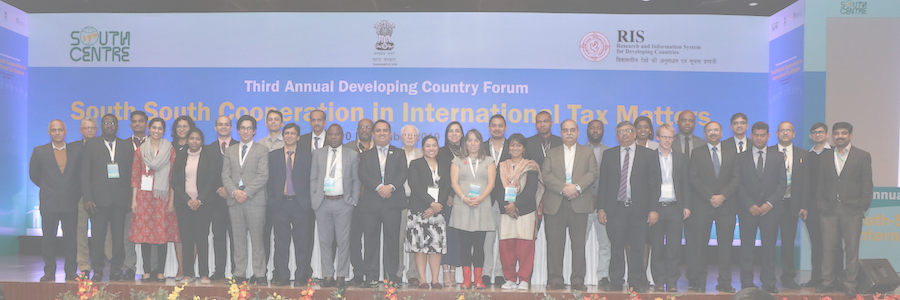
South Centre (SC) in collaboration with the Policy Center for the New South (PCNS) organized on October 13, 2021, a webinar on the issue of International Taxation from the Global South perspectives.
Tax revenue mobilization plays a key role in financing the economic and social development of countries. When well designed and implemented, tax policy can help developing countries raise revenue and increase their spending, especially in the social sector. Indeed, tax revenue as a share of GDP represent only 15% to 20% in low and middle-income countries, because of obstacles such as the imbalanced and complex international standards designed for developed countries, and the difficulties in collecting taxes in developing countries.
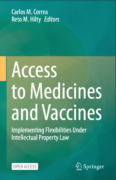
Access to Medicines and Vaccines: Implementing Flexibilities Under Intellectual Property Law
Description:
This book is an outcome of a partnership between the Max Planck Institute (MPI) for Innovation and Competition and the South Centre, which jointly organized a Global Forum on Intellectual Property, Access to Medicine and Innovation in Munich on 9– 10 December 2019.
This book examines topics of particular relevance for shaping intellectual property regimes that take into account public health concerns. It provides not only deep analyses but options for the interpretation of existing regulations or the adoption of new legislation that, being consistent with the TRIPS Agreement, can allow the judiciary and policy makers to take such concerns into account. In different chapters, the book addresses various dimensions of the flexibilities allowed under the TRIPS Agreement. Although there is a significant literature and statements on the subject, such as the ‘Declaration on Patent Protection. Regulatory Sovereignty under TRIPS’ elaborated under the auspices of the MPI, the book contains new reflections and examines recent developments in case law and legislation.
The covered issues include how the TRIPS Agreement can be interpreted to implement its flexibilities, the use of competition law to promote access to medicines, the role of cooperation in the examination of patent applications, patentability requirements, the impact of TRIPS plus provisions (such as the linkage between patents and drug regulatory approvals), the patentability in the area of CRISPR genome editing technologies, as well as an analysis of the scope of exceptions and limitations to exclusive rights provided for by the Agreement, such as the exhaustion of rights and parallel imports, compulsory licenses, the ‘Bolar exemption’, and procedural mechanisms like pre-grant oppositions. The implications of the protection of test data are also examined.
While celebrating the opportunity of working together in organizing the Global Forum, we hope that this book will assist policy makers and judges and provide new inputs for academic research. While, as mentioned, there is a differentiated impact of intellectual property rights depending on the level of development of the country where it applies, the reconciliation of such rights with public health interests, particularly in relation to access to medicines, is a matter of concern for all countries.
Developing Countries Require Appropriate Means of Implementation to Deal with the Climate Crisis
South Centre Statement
26th United Nations Climate Change Conference of the Parties (COP 26)
Glasgow, 31 October – 12 November 2021
Climate finance is crucial to support developing countries’ efforts to implement their NDCs. Climate finance must not increase developing countries’ debt distress. Art.6 negotiations should increase the level of ambition.
The International Treaty on Plant Genetic Resources for Food and Agriculture: Saving, Sharing and Taking Care of the Plants and Seeds that Feed the World
By Dr. Kent Nnadozie
This Policy Brief provides an introduction to the International Treaty on Plant Genetic Resources for Food and Agriculture and its contribution to conserve, sustainably use and fairly and equitably share the benefits of plant genetic resources for food and agriculture, for sustainable agriculture and food security. The brief also provides an update on the involvement of the ITPGRFA in the prevailing issues under discussion in various biodiversity-related fora, including ongoing negotiations for a Post-2020 Global Biodiversity Framework, and response to the COVID-19 global pandemic.






 Description: